Quick verdict
When a cat scratches a rug, start with a wide horizontal scratcher placed directly over or beside the damaged edge. If the cat attacks a rug corner by reaching upward, test a tall stable post beside that corner instead. Protect the rug only where the claws land, and avoid adhesive or loose coverings until you have tested them on the rug's actual fibers.
What to try first
- Find the exact target. Is your cat pulling the bound edge, digging into the corner, or scratching the middle after a nap? The location and angle decide the replacement.
- Put a legal surface at the rug. Place a flat scratcher over the favorite edge for a short test. If your cat scratches upward at the corner, add a vertical post beside it.
- Make the rug boring and safe. Tuck loose threads away, remove fraying pieces, and use a tested physical barrier if it cannot create a trip hazard or block the cat's route.
- Secure the floor setup. A rug that slides can make both scratching and play unsafe. Use a suitable non-slip rug pad under the rug, keeping the cat's escape path clear.
- Reward the replacement. Offer play, praise, or a small treat immediately after your cat uses the scratcher. Never force the paws onto it.
Product shortlist
Choose one surface that matches the rug behavior and one temporary protection layer only if the rug needs help while the new habit forms.
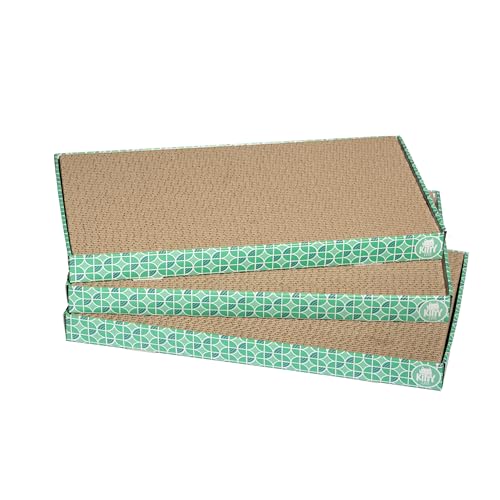
Kitty City XL Corrugated Cat Scratcher for cats that pull at flat rug surfaces
Put this wide cardboard scratcher beside the rug's favorite edge or partly over the target during retraining. It gives the cat a flat surface to pull against without sacrificing the familiar body position. Skip it if your cat chews and swallows the cardboard.
View on Amazon
SmartCat Pioneer Pet Ultimate Scratching Post for cats that climb up a rug corner
A tall stable post can be the better match when the rug is being used as a launch point for an upright stretch. Place it beside the corner, not across the room. Skip it if your cat only scratches flat materials and ignores vertical surfaces.
View on Amazon
CLAWGUARD Cat Training Tape Sheets for a short-term guard on a tested rug edge
Use adhesive protection only after testing an inconspicuous part of the rug and checking that the fibers do not pull or hold residue. Keep it on the narrow target area while the scratcher sits next to it. Skip tape on delicate, loose-pile, antique, or irreplaceable rugs.
View on Amazon
JW Pet GripSoft Cat Nail Clippers for reducing snags while the rug habit changes
Calmly trimming only the visible sharp tip can reduce pulled threads and snags, but it does not remove the need to scratch. Skip trimming if your cat panics or you cannot see the safe cutting area; ask a vet or groomer to help.
View on AmazonMatch the fix to the rug damage
| What your cat does | Try first | Why |
|---|---|---|
| Pulls the bound edge or fringe. | Wide flat scratcher beside the edge | It keeps the forward, low scratching motion while moving claws off the rug. |
| Claws one rug corner vertically. | Tall post plus a temporary corner guard | It matches the upright stretch and limits access to the rehearsed target. |
| Scratches after waking on the rug. | Scratcher beside the nap route | It catches the natural stretch before the cat reaches the rug. |
| Rug slides during scratching. | Appropriate non-slip rug pad | Stable footing makes the floor safer and the scratcher more predictable. |
| Chews loose rug threads. | Remove loose fibers and ask your vet if ingestion continues | Chewing and swallowing fibers is a different safety concern from ordinary scratching. |
What to skip
- Pulling threads out by hand. It can make the damaged area larger and leave more tempting loose fibers.
- Untested tape or sprays. Adhesive and cleaners can damage rug fibers or create a stronger smell than the original problem.
- Loose blankets over the rug. They can bunch up, slide, and become another surface to grab.
- Moving the scratcher far away. A replacement has to be convenient at the moment the cat wants to scratch.
- Punishment. Yelling or spraying may stop the visible action without teaching a safe alternative.
The 7-day rug reset
- Day 1: Mark the exact rug target and check whether the rug slides or has loose threads.
- Day 2: Put one matched scratcher directly beside or over the target and secure the floor setup.
- Days 3-4: Invite interest with play and reward every voluntary scratch on the new surface.
- Days 5-6: Add only a tested, narrow protection layer if the rug still needs a barrier; inspect it daily.
- Day 7: Keep the scratcher in place and remove protection gradually only after use is consistent.
When rug damage is not just a scratching problem
If your cat is chewing and swallowing rug fibers, suddenly scratches much more intensely, or also hides, stops eating, overgrooms, changes litter box habits, or seems painful, ask your vet. The floor may need to be secured immediately, and gear is not a substitute for veterinary care or a qualified behavior professional.
FAQ
How do I stop my cat from scratching the rug?
Place a horizontal scratcher directly beside the damaged area, secure the rug, and reward the cat for using the new surface. Use a temporary barrier only after testing it on the rug fibers.
Why does my cat scratch the rug instead of a scratching post?
The rug may offer the exact angle, texture, stability, and location your cat wants. Match those features with a scratcher and move it close to the chosen rug spot.
Can I put double-sided tape on a rug?
Only after testing a hidden area and confirming that the adhesive will not pull fibers or leave residue. Avoid tape on delicate, loose-pile, antique, or irreplaceable rugs.
Should I trim my cat's nails to protect the rug?
Calmly trimming the visible sharp tip can reduce snags, but it does not replace scratching. Use nail care as a damage-control layer alongside a better scratching target.