Quick verdict
Start with the largest open litter box your bathroom can safely accommodate, then place a mat across the actual exit path and keep the scoop and waste pail just outside the cat's way. In a tiny bathroom, source control beats fragrance: scoop daily, remove waste from the room, and use ventilation or a room air purifier only as support.
Measure the room before buying
- Mark the box footprint. Use painter's tape to outline the box, leaving enough clearance for your cat to enter, turn, dig, and leave without brushing the toilet or vanity.
- Protect the route. Keep the bathroom door from closing on the cat, and do not put the box where a person, dog, or laundry basket can block the only exit.
- Separate toilet and food. Do not place food or water beside the litter box just because the room is convenient.
- Make the human station narrow. Put the scoop, bags, and sealed waste pail outside the cat's entrance if possible. The cat needs the floor area more than the accessories do.
Product shortlist
Buy the box only after measuring. The rest of the setup should make daily cleaning easier without shrinking the cat's usable space.

PetFusion BetterBox Non-Stick Litter Box for an open bathroom setup
An open box is easier to inspect, scoop, and ventilate than a tight covered box. Check the full footprint and leave the entrance clear before ordering. Skip it if the bathroom only fits a box that prevents your cat from turning comfortably.
View on Amazon
iPrimio Stainless Steel Cat Litter Box for a washable box in a narrow room
Stainless steel gives you a smooth, non-porous surface to wash when a small bathroom makes odor noticeable quickly. Compare the interior and exterior measurements with the space, and keep a familiar box during a gradual switch. Skip it if the available size is too cramped for your cat.
View on Amazon
iPrimio Cat Litter Trapper Mat for the first steps out of the bathroom
Place the mat where paws actually land after the box, not only under the rear edge. Choose a size that catches the route without making the cat jump, slip, or squeeze past the toilet. Skip it if the surface catches claws or curls into the doorway.
View on Amazon
DuraScoop Original Cat Litter Scoop for a compact daily-cleaning station
A scoop that removes intact clumps helps keep a small room from holding damp residue. Hang it on a wall or store it in a narrow caddy outside the cat's path. Skip any storage spot that leaves a dirty scoop beside towels, toiletries, or food.
View on Amazon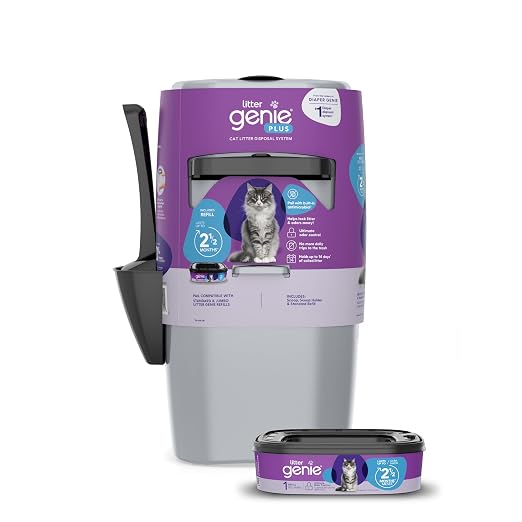
Litter Genie Plus Pail for sealing waste in a tiny bathroom
A sealed pail keeps scooped clumps from sitting in an open trash can and taking over the room. Keep it outside the box entrance and empty it on a regular schedule. Skip it if you can take each scoop directly outside without storing waste.
View on Amazon
Amazon Basics Air Purifier for supporting air quality outside the box
A room purifier may help with airborne dust and lingering residue after the box is clean. Put it where air can circulate, never inside a cramped litter cabinet or directly beside loose litter. Skip it when the real issue is missed scooping, urine outside the box, or a blocked vent.
View on AmazonWhich setup should you choose?
| Bathroom constraint | Buy first | Why |
|---|---|---|
| There is room for one open box with a clear entrance. | Open box plus exit mat | It preserves visibility, airflow, and easy scooping while containing the first steps of tracking. |
| The current plastic box holds odor or is hard to wash. | Stainless steel box | A smooth, washable surface is easier to reset in a small room, provided the box still gives enough usable space. |
| The bathroom floor is too crowded for a waste bin. | Scoop stored outside plus direct waste removal | Keep the cat's route open and avoid using the limited floor for a human accessory. |
| Clumps are breaking or sticking to the box. | Reliable scoop and daily cleaning | Whole clumps remove more residue than adding fragrance or an air freshener. |
| The box is clean but the room still feels dusty. | Room air purifier | Use it as support after source control, with clear airflow and a filter maintained according to its instructions. |
What to skip
- A box that is technically small enough. If your cat cannot turn, dig, and leave normally, the room is not a workable litter setup.
- A fully sealed cabinet in a tiny bathroom. It can trap odor, restrict access, and make it harder to notice a change in urine or stool.
- Air fresheners, essential oils, and strong fragrance. They mask the source and can make the toilet area less comfortable for a scent-sensitive cat.
- A mat that blocks the door. A curled edge or narrow exit can become a trip hazard and discourage box use.
- An open wastebasket beside the box. It turns each scoop into another odor source in the smallest room.
The 7-day tiny-bathroom reset
- Day 1: tape the intended footprint and observe whether your cat can enter, turn, dig, and leave without obstruction.
- Day 2: place the mat on the real exit path and move the scoop and waste pail outside the cat's route.
- Days 3–4: scoop at least daily, remove waste from the room, and note whether the cat avoids the box or waits to use it.
- Days 5–7: adjust only one variable at a time: box position, mat position, or cleaning routine. Keep the familiar setup available during a box change.
When the bathroom is not the real problem
Sudden litter-box avoidance, straining, blood, repeated accidents, vomiting, major appetite changes, or visible distress are not shopping problems. Call your vet promptly, especially for changes in urination. A box that is too small, dark, noisy, or easy to block can contribute to avoidance, but gear is not a substitute for veterinary care or a qualified behavior professional.
FAQ
What is the best litter box for a tiny bathroom?
Choose the largest open box that leaves your cat a clear route to enter, turn, dig, and leave. Measure the room first; a cramped covered box is not automatically better.
How do I control litter box smell in a tiny bathroom?
Scoop daily, remove waste from the room, wash the box, keep the door or vent usable, and use an air purifier only as support after source control.
Can I put a litter box next to the toilet?
It can work if the cat still has an unobstructed entrance and exit, the toilet area stays clean, and food and water are elsewhere. Do not make the cat squeeze between the box and the toilet.
Should I use a covered litter box in a small bathroom?
Not as the default solution. A covered box may contain some scatter, but it can reduce airflow and make access or cleaning harder. Keep an open option while you learn your cat's preference.