Quick verdict
A laundry-area litter box works when the cat can reach it without passing through a closed door, the box is not touching a vibrating appliance, and detergent or dryer sheets cannot be knocked into the litter. Keep the box open and easy to inspect, leave a clear exit, and use a mat that fits the actual step-out path. If the room is noisy, hot, cramped, or frequently closed, choose another location.
What to check before buying anything
- Test the noise. Stand beside the proposed box while the washer spins and the dryer runs. If the sound or vibration is startling to you, assume it may bother your cat too.
- Keep the box independent. Do not place it directly against the washer, dryer, water heater, or a door that can trap the cat. Leave room to enter, turn, and leave without squeezing past a machine.
- Move chemicals up and away. Store detergent, bleach, pods, dryer sheets, and stain removers in a closed cabinet that the cat cannot access. A litter box should never share an open shelf with laundry products.
- Check the door routine. If the laundry room is sometimes closed, add a second box elsewhere. A box is not useful if the cat cannot reach it when needed.
Product shortlist
Choose based on the room's real constraint. A mat and cleanup station usually solve the mess; an air purifier is secondary and a new box is only worth it when the current box is hard to clean or inspect.

iPrimio Cat Litter Trapper Mat for the step-out zone
Place it where paws land after the box, not just under the box. A laundry room often has a narrow route, so measure the space and keep the mat from blocking the washer door or the cat's exit. Skip it if the cat avoids unfamiliar textures.
View on Amazon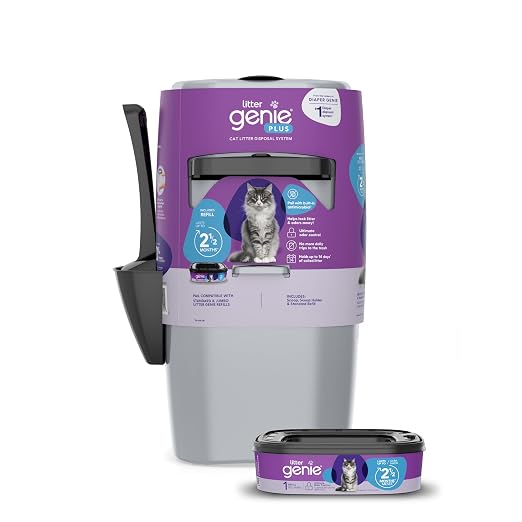
Litter Genie Plus Pail for sealing scooped waste
A sealed pail keeps used clumps out of an open laundry-room trash can and makes daily scooping easier to finish. Put it away from detergent, water splashes, and the cat's path. Skip it if you remove bagged waste immediately.
View on Amazon
DuraScoop Original Cat Litter Scoop for a compact cleanup station
A sturdy scoop is useful when the box is tucked into a utility room and needs to be cleaned quickly before laundry starts. Store it in a small caddy outside the cat's route and wipe it regularly. Skip the upgrade if your scoop already removes clumps cleanly.
View on Amazon
PetFusion BetterBox Non-Stick Litter Box for an open box away from the machines
An open, easy-to-wash box can be a better fit when the current pan is cracked, holds odor, or is difficult to inspect in a narrow room. Check the dimensions and place it on a stable surface with clearance around it. Skip a new box if the real problem is laundry-room noise or a closed door.
View on Amazon
Amazon Basics Air Purifier for lingering dust outside the box
Use an air purifier only after scooping, waste handling, ventilation, and litter choice are under control. Keep it stable and away from water, detergent, and cords the cat can chew. Skip it if the laundry room is too cramped for safe airflow.
View on AmazonWhich laundry-area setup should you use?
| Room problem | Try first | Why |
|---|---|---|
| Litter reaches the hallway after the box. | Exit mat | It catches loose litter without narrowing the cat's entrance. |
| Used clumps smell beside the washer. | Sealed waste pail | It removes the open-trash odor source from the room. |
| The box is hard to scoop between laundry loads. | Compact scoop station | Short, predictable cleanup is easier to maintain than a large storage system. |
| The cat startles during spin cycles. | Move the box | Gear cannot make a vibrating appliance feel like a quiet toilet area. |
| The room is closed for part of the day. | Second box elsewhere | Reliable access matters more than using one convenient room. |
What to skip
- Box directly beside the washer or dryer. Vibration, heat, and blocked clearance can make the spot uncomfortable or unsafe.
- Open detergent storage. Laundry pods, bleach, and cleaners need a closed storage location away from the cat.
- A box behind a closed door. Add another accessible box instead of relying on a room that is not always available.
- Air purifier as the first purchase. It cannot replace scooping, ventilation, or a box location your cat tolerates.
- Blocking the exit with a large mat or bin. The cat should be able to leave without squeezing through a cluttered utility room.
The 10-minute laundry-room setup
- Mark a box location with clearance from both appliances, swinging doors, water sources, and stored chemicals.
- Run one normal laundry cycle and observe whether the cat can still approach and leave calmly.
- Put a mat on the real exit path, but keep the entrance and machine doors unobstructed.
- Store detergent, pods, dryer sheets, and stain removers in a closed cabinet; secure loose cords.
- Scoop daily, seal waste, and move the box if the room becomes noisy, hot, damp, or inaccessible.
When gear is not enough
If your cat suddenly avoids a box, cries, strains, produces blood, vomits, has repeated diarrhea, or seems painful or unusually tired, contact a veterinarian promptly. If the cat only avoids the laundry room, treat noise, access, and stress as the likely setup questions; do not punish or force the cat into the box.
FAQ
Can I put a litter box in the laundry room?
Yes, if the room stays accessible, quiet enough for your cat, ventilated, and free of reachable laundry chemicals. Keep the box away from vibrating appliances and leave a clear route in and out.
Should a litter box touch the washing machine?
No. Leave clearance around the box and avoid locations that transfer vibration, heat, water, or appliance movement to the cat's toilet area.
How do I stop litter from spreading out of a laundry room?
Place one litter mat on the step-out path, scoop regularly, and keep the mat and box from blocking the door or machine. A small vacuum or broom can handle the remaining edge scatter.
What if my cat stops using the laundry-room box?
Move the box temporarily to a quiet accessible spot, add a second box, and check for noise, blocked access, strong smells, or chemical exposure. If avoidance is sudden or comes with illness signs, call a veterinarian.