Quick verdict
For cat hair everywhere, start with the surface that creates the most work: usually a couch, bed, or favorite blanket. Use a reusable pet-hair roller there, brush loose hair from clothes before washing, and keep a garment brush by the door. Laundry aids can help with dryer-safe loads, but they cannot replace removing clumps before the washer.
What to try before buying anything
- Map the hotspots. Watch where your cat sleeps, rubs, and grooms. Three high-hair surfaces usually explain most of the visible mess.
- Separate source hair from cleanup hair. Put a washable throw on the favorite furniture and keep the cat's bedding separate from everyday clothing.
- Remove clumps before laundry. Shake clothes over a hard floor or outdoors when possible, then brush or roll off visible fur before the load starts.
- Keep the tool where the hair appears. A roller beside the sofa and a garment brush by the exit are more useful than a larger tool hidden in a closet.
Product shortlist
Choose one tool for the stage where the hair is causing trouble. Most homes need a furniture roller and a small garment tool before they need a complete grooming or vacuum collection.

ChomChom Roller for cat hair on couches and bedding
This is the best first buy when hair is collecting on large fabric surfaces every day. Lay a cushion or blanket flat and work in short passes before the fur reaches clothes. Skip it if your problem is only a few hairs on one shirt; a garment brush is faster there.
View on Amazon
Fur-Zoff Pet Hair Remover for stubborn fur on sturdy fabric
Use this only where hair is woven into durable upholstery, rugs, or a heavy coat and a roller is not lifting it. Test an unseen area and use a light touch. Skip it on knits, loose loops, delicate weaves, and any fabric you do not want to roughen.
View on Amazon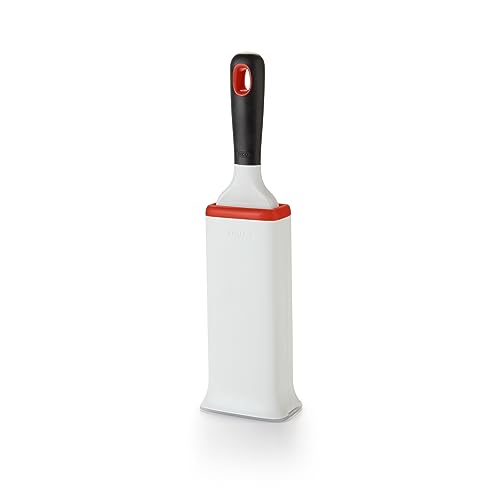
OXO Good Grips FurLifter Garment Brush for daily fur on clothes
A reusable garment brush is the practical choice when black trousers, shirts, or coats collect loose hair between the closet and the door. Keep it visible and brush the garment flat before leaving. Skip it for deep upholstery; the smaller head makes that job slow.
View on Amazon
Scotch-Brite Pet Lint Roller for a last-minute exit check
Sticky sheets are useful for the few hairs that remain on a shirt, coat, or carrier blanket right before you leave. Put one by the coat rack or in the car. Skip it as the only whole-home tool because repeated rolling creates waste and does not loosen packed fur.
View on Amazon
Bounce Pet Hair and Lint Guard Mega Sheets for dryer-safe laundry with static cling
Use a sheet only for a dryer load whose care label permits it, after visible clumps have been removed. It may help with loose hair and static on washable basics. Skip it for air-dry-only or delicate garments, and skip scented laundry products if fragrance is a concern in your household.
View on AmazonWhich setup should you buy?
| What is happening | Buy first | Why |
|---|---|---|
| Hair covers the couch or bed. | Reusable pet-hair roller | It handles a large surface quickly and removes fur before it spreads to clothes. |
| A heavy coat or rug holds onto fur. | Targeted fabric remover | Use a firmer tool only on sturdy fabric where a roller cannot lift embedded hair. |
| A few hairs appear before leaving. | Garment brush | It is fast, reusable, and easy to keep beside the door. |
| The laundry load is full of loose hair. | Pre-cleaning routine | Shake, brush, or roll before washing; laundry aids are not a substitute for this step. |
| Dryer-safe clothes have static and loose fur. | Pet-hair dryer sheet | It is a laundry-stage helper, not a way to rescue delicate or already-felted fabric. |
What to skip
- Washing fur-covered clothes immediately. The washer may spread loose hair to the rest of the load and the drain system.
- Using the same scraper on every fabric. A tool that works on a rug can snag knits, loops, or delicate upholstery.
- Strong tape on clothing. Adhesive can leave residue or pull fibers; test any sticky method on a hidden area first.
- Shaving the cat as a cleanup shortcut. Do not change the coat without a veterinary or qualified grooming reason.
- Buying a tool for every room. Start with the two hotspots that create most of the visible hair and build from evidence.
The 7-day hair reset
- Day 1: Identify the three biggest hair hotspots and place one washable throw or cover on the most-used surface.
- Days 2–3: Roll the couch or bed once daily, then empty the tool immediately so loose fur does not return to the room.
- Days 4–5: Brush clothes before they enter the hamper and keep the garment brush by the exit rather than in a drawer.
- Day 6: Separate cat bedding from dark clothes and clean the dryer lint screen before the next laundry load.
- Day 7: Keep the routine only at the hotspots that still matter. A short repeatable cycle beats trying to deep-clean the whole home every day.
When gear is not enough
Heavy shedding with bald patches, flaky skin, persistent itching, overgrooming, or a sudden coat change can have a health cause. Ask your vet about those signs instead of escalating grooming or cleaning products. This page is a cleanup routine, not a substitute for veterinary care.
FAQ
How do I deal with cat hair everywhere?
Start with the three surfaces that collect the most fur, use a reusable roller there, and remove loose hair from clothes before laundry. Keep the final garment tool where you leave the house.
What removes cat hair from a couch?
A reusable pet-hair roller is a good first test for most fabric couches. For fur embedded in sturdy upholstery, use a targeted remover carefully and test an unseen area first.
Should I wash cat-hair-covered clothes?
Remove visible clumps before washing. Shake, brush, or roll the garment first, then follow the care label; do not rely on the washer to remove pet hair.
Does a dryer sheet remove cat hair?
It may help with loose hair and static in a dryer-safe load, but it will not remove clumps or replace pre-cleaning. Skip it for delicate or air-dry-only garments.